


Dad Talk: Discussing future careers and future-proof ideas against AI
When Should We Talk to Our Kids About Their Future Careers?
Most parents agree that talking to kids about their future matters. What we struggle with is when to start and how hard to push. Start too early and it feels like pressure. Wait too long and it feels like neglect. The truth is, career conversations shouldn’t be a single talk. They should be a series of age-appropriate conversations that evolve as your child grows. Below, I've broken down different ways I have engaged this as the years pass and also added a whole section on future-proof careers.

SECTION 1: When to Start the Conversation (By Age)
Ages 5–8: Curiosity Over Careers
At this age, kids aren’t choosing a career. They’re discovering the world.
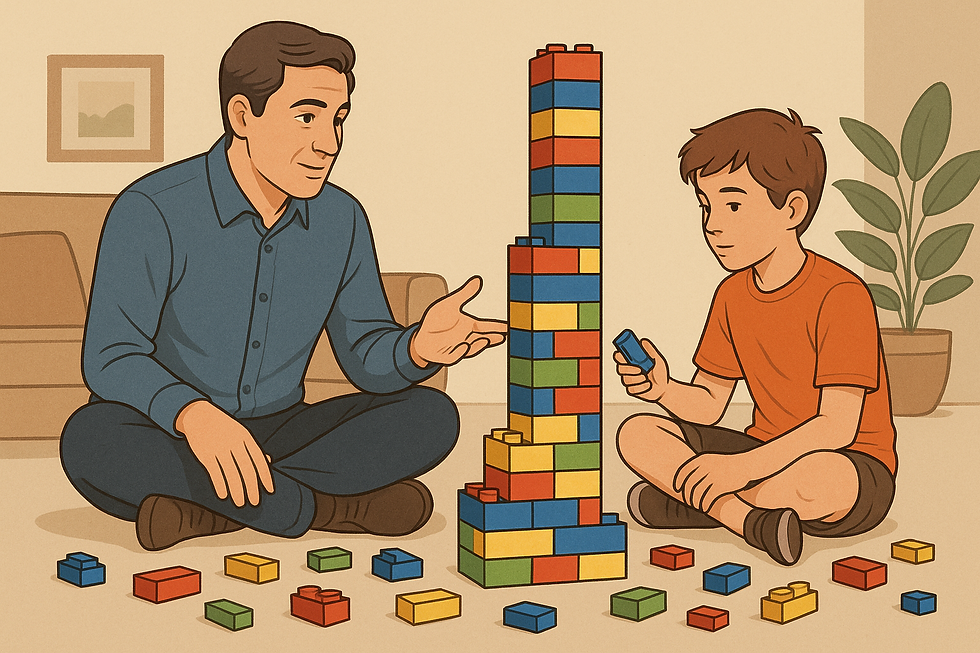
The goal here isn’t direction. It’s exposure. Talk casually about different jobs you see every day. Ask what they enjoy. Let them ask questions. Let them imagine. This is the stage for building things, reading stories, drawing pictures, and asking “why” a hundred times a day. There’s no need to connect the dots yet. What matters most at this age is curiosity, confidence, and the freedom to explore without expectations attached.
Something that I personally would focus on at this stage would be observing any skills or attributes that are useful in specific careers. For example, at 7 and 8 they may begin showing signs of a strong memory, strong team work or communication traits or quiet individual diligence (like sitting quietly alone for long periods to color, draw, or play). As you observe these strengths, it is important to reinfoce them with positive comments and suggestions for more activities that use these traits. For example, if your child is showing early signs of a very strong memory while playing with flash cards, give them a compliment about their fantastic memory and then suggest a STEM-related game like assembling a robotics toy.

Ages 9–12: Interests Start Becoming Skills
This is where patterns begin to show up.
Kids start realizing what they enjoy and what they’re good at. They also begin to understand that effort leads to improvement. That’s a powerful lesson when it comes to future conversations.
Instead of asking, “What do you want to be when you grow up?” try asking questions like, “What do you like learning about?” or “What do you enjoy practicing?”
This is a great age to gently connect interests to skills without locking anything in. If they like building, talk about how builders solve problems. If they like helping others, talk about jobs that do exactly that. The goal is still exploration, but now with a little structure.
Bringing it home: At this age range, my children all became deeply curious about careers, money, life and death and many other topics. Their curiosity exploded. The best thing I did was just keep the conversations flowing one to the other, continuing where we left off when discussing one career when we discuss another. Connecting their individual strengths and attributes to careers with purpose.
Ages 13–15: Awareness Without Pressure
This is the transition phase.
Choices start to matter more. Classes, activities, and habits begin to shape options down the road. Kids at this age can understand that decisions have consequences, but they still need room to explore.
This is where parents should introduce reality without fear. Some jobs change. Some skills last longer than others. Learning how to learn matters more than picking the perfect path.
Conversations should be honest but supportive. Preparation doesn’t have to feel like pressure when it’s paired with encouragement.
Bringing it home: It is so important to understand the hormonal and social changes that are happening with your children at this age. If ages 9-12 are for introducing careers and money topics, this age (13 to 15) is where it is solidified. In the United States, much like other countries around the world, children leaving 8th grade and headed to high school may have an opportunity to select trade schools, academy programs like STEM or the arts, and so on. For many children at this age, they start to feel an immense amount of pressure to choose something. Your job as Dad is to remind them that things are still flexible, but encouraging them to test the waters of actual college level courses, high school academy programs, or advanced art programs with a pathway to creative careers.
Ages 16–18: Action and Ownership
This is when the conversation shifts from ideas to steps.
Not every teenager needs a perfectly defined plan, but they should start taking ownership of their direction. That might mean certain classes, certifications, part-time work, internships, or learning a trade.
The parent’s role changes here. You’re no longer directing. You’re coaching.
Guidance stays. Control fades. The goal is helping them learn how to make informed decisions and take responsibility for them.
Section 2: Future-Proofing Careers in the Age of AI
The world our kids are entering won’t look like the one we grew up in. Artificial intelligence will continue to change how work gets done. That doesn’t mean opportunity disappears. It means the rules shift. One of the biggest mistakes parents make is focusing on specific job titles. Titles change. Skills last. I encourage you as a Dad to help your kids focus on building skills that don’t involve mind-numbing repeatable tasks and instead focus on delivering tangible skills person-to-person.

Skills That Age Well
Careers that hold up over time tend to rely on the same core abilities:
Problem-solving
Critical thinking
Communication
Creativity
Adaptability
These core skills will transcend the evolution of job titles and expanding/collapsing job markets. While repeatable tasks with low problem-solving requirements will slowly evolve to fully-automated or partially-automated systems, the ones who craft overarching systems or who oversee these automations will be immune to these changes.
Bringing it home: I broach this topic by engaging the kids one-by-one and listening to their ideas; such as about being the next great YouTube influencer. Then I ask engaging questions such as, “hey, I know you really enjoy talking with people and getting to know them. What do you think about the future of sales or companies that sell things?” We may discuss how computers and Ai could revolutionize some of the repeatable tasks in that area, like emails and appointment tracking. But a great company understands the needs of their customer and provides a solution. So a future salesman, may need to learn how to use the latest toolset but will still need to cultivate great communication skills.
Here are a few examples of future-proof careers that I have suggested to my kids in our Dad Talks:
- Salesman
- Corporate Management / CEO / Entrepreneur
- Construction Site Management / Handyman Repairs
- Construction Project Management (with AI tools for prepping documents)
- Chef / Baker
- Doctor / Therapist / Physical Therapist / Counselor
- Lawyer (with Ai as a legal aid for prepping arguments and documents)
- IT Service Support
- Database Service Management (Someone to physically repair AI Data Engines)
- Power Supply Service / Power Maintenance / Solar Panel Installation
There are many more examples, but I think you get the idea. A human to handle the physically challenging parts of so many complex tasks. While Ai gets smarter and bots or drones will be more sophisticated, a robot can’t taste food and say it is too sweet or too sour to adjust. It may be able to identify a certain hard drive is defective, but a human will need to walk through the halls of a database server farm to replace the broken drive.
We will always have a place in this world. It will just take some creativity to learn how to incorporate new tools and techniques to increase proficiency.

SECTION 3: WRAPPING IT UP
The goal of these conversations isn’t to force our kids into a decision too early or shield them from a changing world. It’s to give them confidence, awareness, and adaptable skills that grow with them. Careers will evolve. Job titles will change. Technology will accelerate. But curiosity, communication, problem-solving, and responsibility will always matter. As dads, our role isn’t to map every step of our children’s future. It’s to walk alongside them, ask good questions, and help them build the tools they’ll need to thrive in a world we can’t fully predict.

Good read. Thanks for sharing this perspective